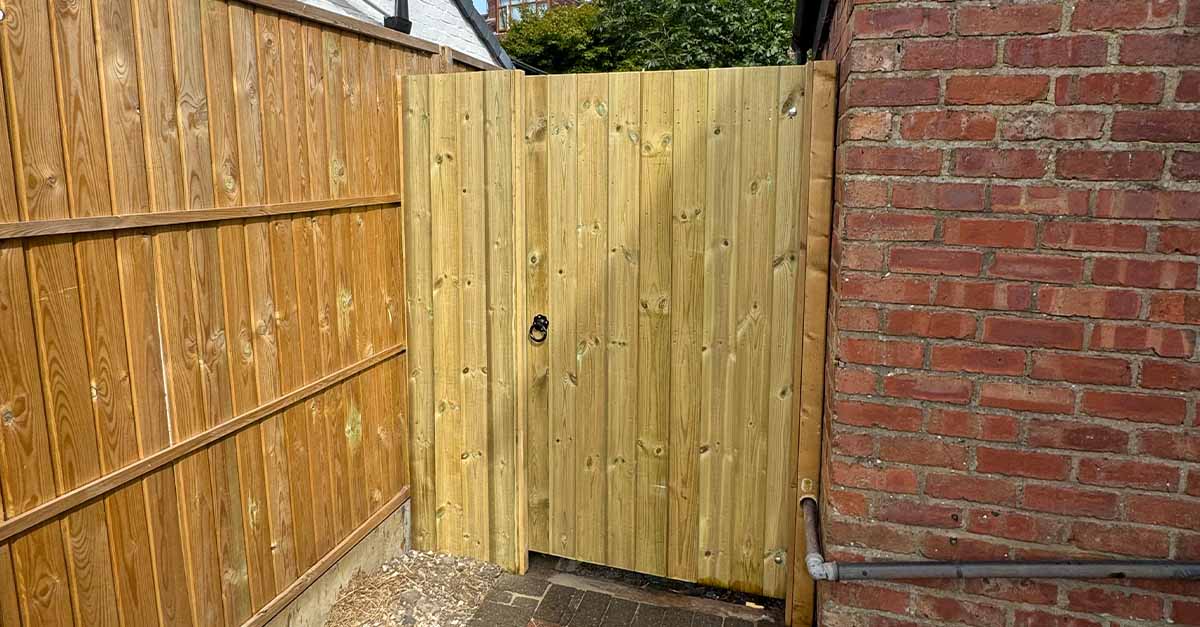
Custom Side Gate in Reddish: Replacing the Gate and the Failed Post Behind It
A homeowner in Reddish got in touch to replace an old timber side gate that had started to move around. We had done some driveway work for them before, so they knew us and gave us a call. On paper it looked like a straightforward swap, an old gate out and a new one in. Once we got on site, it was clear the gate was only half the story. The post holding everything up had snapped at ground level, and that was the real reason the whole side of the property was swaying.
If you have a side gate that has started to wobble, or a post that has seen better days, here is how we tackled a job like this in Reddish and why the bit you cannot see matters just as much as the gate itself.
The brief
The customer wanted to replace a tired timber side gate and the infill panel next to it. The gate was around six feet tall and unusually wide at more than a metre, and alongside it sat a timber infill panel that filled the rest of the opening.
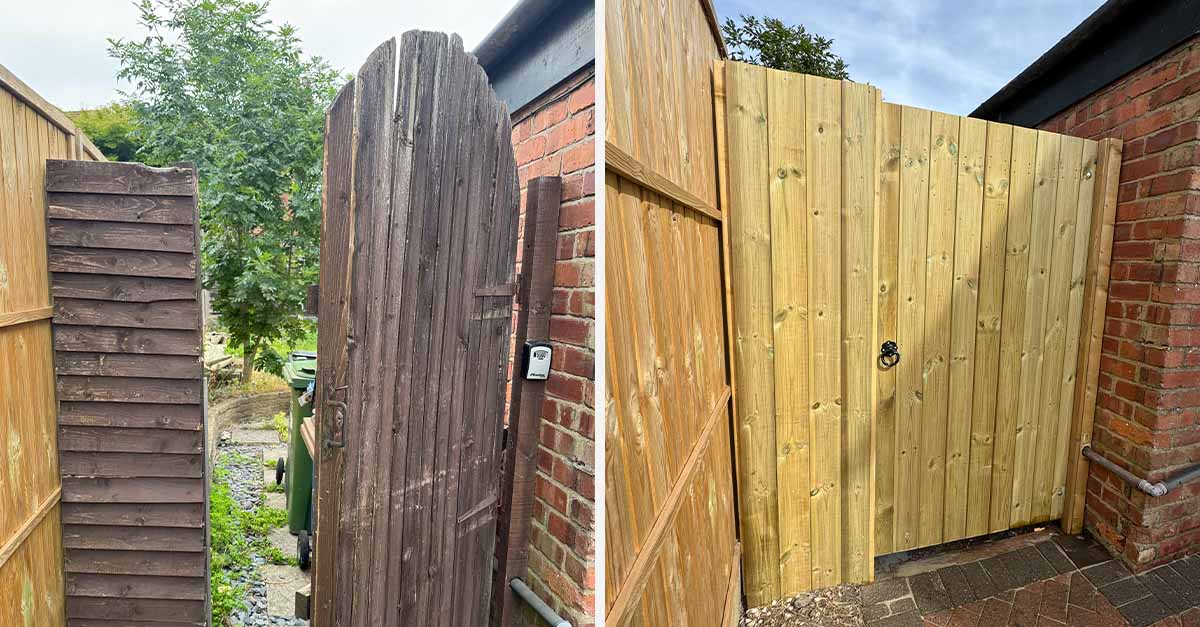
Two things had gone wrong. When the neighbour had their fencing replaced, the panel next to the gate had become unstable. More seriously, the main timber post between the gate and the panel had failed right at ground level. The bottom of the post had snapped, so the whole section could move and sway. A new gate on its own was never going to fix that, so the job had to sort out the structure first and the gate second.
What we found on site
We came out to measure the full opening and look over the existing setup. The gate, the separate infill panel and the connections to the neighbour's fence and the brick wall were all part of one arrangement, and the broken central post was tying it all together (badly).
That snapped post was the heart of the problem. With it failed at the base, the surrounding structure had lost its rigidity and was free to shift. Fitting a shiny new gate onto that would have looked fine for about a week and then started giving the same trouble. The old post and its concrete footing had to come out completely before we could put in a properly secured replacement.
Choosing the right gate
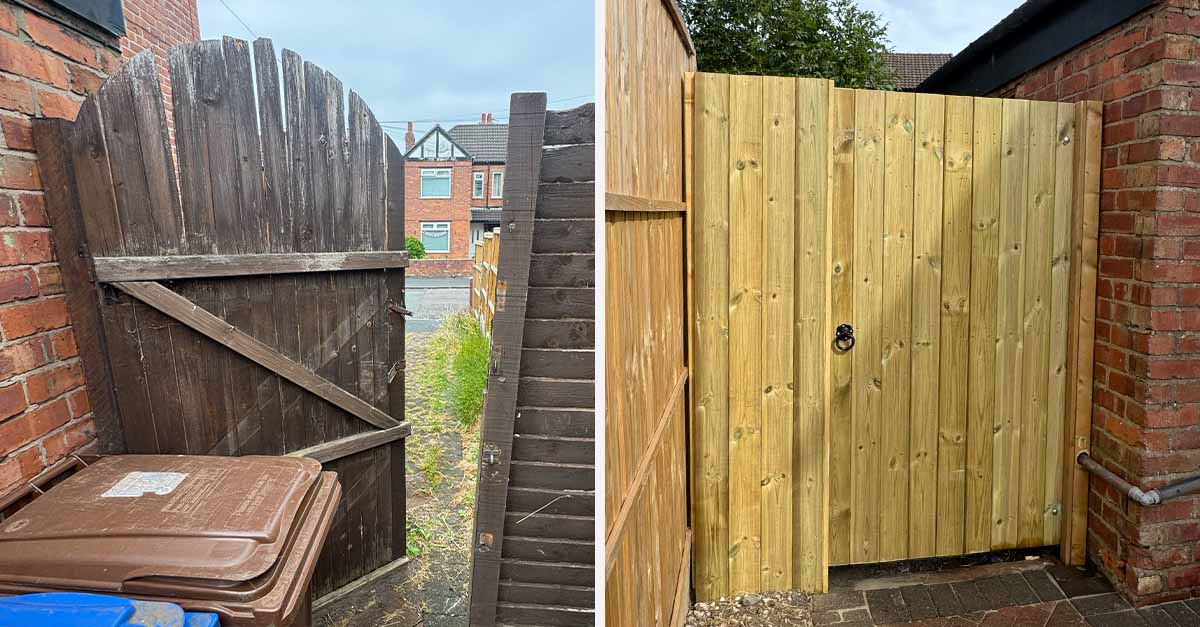
The customer first thought about a like-for-like replacement, something similar to the existing brown-treated feather-edge gate. We talked through the options and agreed on an upgrade instead: a custom gate made from pressure-treated timber with vertical tongue-and-groove boarding.
There are two things worth knowing here. Pressure-treated (also called tanalised) timber has preservative forced into it under pressure, so it stands up to the weather better over the long run than a standard brown-treated finish. And tongue-and-groove boards fit together tightly, which gives a more solid look and better privacy than the more open feather-edge style. We ran the same tongue-and-groove timber across both the gate and the new infill panel so the whole opening reads as one clean, consistent piece rather than two mismatched sections.
Sorting the post first
With the design agreed and a deposit taken to get the custom materials ordered, we came back about ten days later to fit everything in a single day.
Getting the old post out was the heavy part of the job. It had been concreted into the ground, so we used a concrete breaker and heavy-duty SDS gear to break through the old footing and clear the hole. Once that was out, we prepped the new pressure-treated post by adding extra bituminous protection to the section going below ground, which is a simple step that helps guard against exactly the kind of rot that finished off the old one. We dug down to roughly 450mm, set the post in, levelled it and locked it in place with Postcrete. That gave us one solid structural point to hang both the new gate and the new panel from.
The infill panel
Next we built the new infill panel from the same tongue-and-groove timber as the gate, running the boards vertically to match. With the new post in, the movement that had plagued the old panel was gone, and the panel now had a proper, secure fixing point instead of leaning on the neighbour's fence for support.
Hanging the gate
The new six-foot custom gate went into the prepared opening. Rather than standard surface-mounted strap hinges, we used heavy-duty hook-and-cranked hinges. The cranked shape lets the gate sit further back within the opening, which looks tidier from the property side and gives a substantial gate like this the support it needs. We finished it with a latch and an internal sliding bolt. We did discuss a keyed lock, but the customer was happy that a bolt gave them everything they needed.
The result
The old, swaying gate and unstable panel are gone, replaced with a solid custom side gate and a matching infill panel that line up as one design. The failed post has been dealt with properly rather than papered over, so the whole arrangement is far more stable than before. The vertical tongue-and-groove timber gives a cleaner, more private finish than the old feather-edge, and the whole job was done in a day.
Thinking about a new side gate in Reddish or Stockport?
A gate that has started to move is often telling you about the post behind it, not just the gate. The best fix comes from looking at the whole thing: the timber for the gate, yes, but also the structural post, the depth it goes into the ground, the hinges and the way it all fixes to the wall. That matters even more on wider openings, where a heavy gate needs proper support to avoid sagging down the line.
We build and fit custom timber gates, side gates and garden gates across Reddish, Stockport and the wider Manchester area, and we are happy to sort out failed posts and repairs at the same time. If your gate is on its way out, or it has started to wobble, we will come and measure up, talk you through the options and build something made to last.
[Get in touch for a free gate survey and quote]
Frequently asked questions
Why does a new gate sometimes need a new post? Because the post is what actually holds the gate up. If it has rotted or snapped at ground level, as it had on this Reddish job, fitting a new gate onto it just passes the problem on. We replace the failed post first so the new gate has something solid to hang from.
Why do timber gate posts rot at the bottom? Ground level is the hardest spot for timber, sitting between wet soil and open air. Over the years that takes its toll, and posts often fail right at the base while the timber above still looks fine. Using pressure-treated timber and adding extra below-ground protection, as we do, helps a new post last much longer.
How deep should a timber gate post go? As a general guide we dig to around 450mm for a side gate post and set it in Postcrete, though the right depth depends on the height and weight of the gate and the ground conditions. A wide, tall gate needs a solid, well-set post to stay square over time.
What is the difference between tongue-and-groove and feather-edge gates? Feather-edge is the more traditional, slightly more open style. Tongue-and-groove boards slot together for a smoother, more solid finish with better privacy, which is why we recommended it here for both the gate and the infill panel.
What does pressure-treated (tanalised) timber actually mean? It is timber that has had preservative forced into it under pressure, so it resists rot and weathering better than an ordinary treated finish. For exterior gates and posts that take a lot of weather, it is a sensible choice.
Can you build a gate for a wider opening? Yes. This gate was over a metre wide and around six feet high, which is bigger than a typical side gate. For openings like that the framing, the post and the hinge choice all matter as much as the timber, and we build to suit the specific opening rather than fitting a standard size.


