Kandla Grey Sandstone Patio in Heaton Chapel: From Tarmac Garden to Proper Outdoor Space
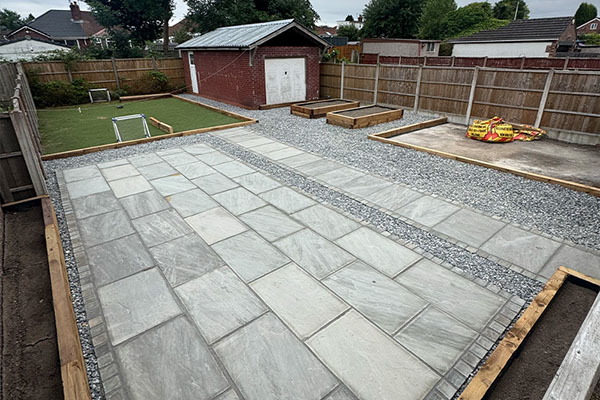
Some gardens are a lawn that's seen better days. This one in Heaton Chapel was tarmac. We took it from that to a large Kandla Grey Indian sandstone patio, matching paths, a sett border, raised timber sleeper planters and blue-grey pebble areas. It's one of the nicest garden transformations we've done in Stockport, so here's how it went together, from the mortar bed up to the final jointing.
Starting point: a tarmac garden
Tarmac is hard-wearing, and it's also about as far from a garden as you can get. The plan was a modern outdoor space with a proper patio as the centrepiece, plus planting and stone around it. We built everything to last, not just to look good on day one.
Why Kandla Grey
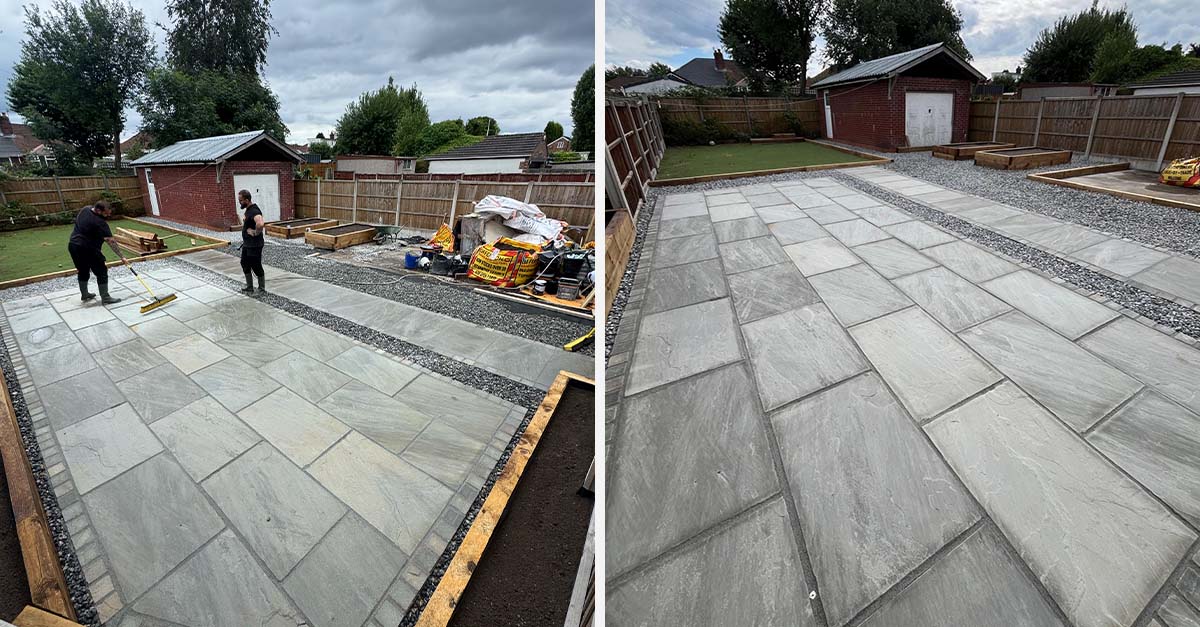
Kandla Grey is an Indian sandstone with a cool, even, grey tone. It sits well with modern houses and with the blue-grey pebbles we chose for the borders. We used it for the main patio, for the paths and for the sett border around the edges, so the whole garden reads as one design.
The patio is laid in a brick bond pattern, with the slabs staggered like brickwork. It looks more natural than a grid, and it works well across a large area because it breaks up the lines.
A full mortar bed under every slab
This is the part you never see once it's finished, and it's the part we care about most. Every slab went down on a full mortar bed. Laying slabs on a few dabs of mortar is quicker, but it leaves hollow patches underneath, and hollow slabs can rock and crack. A full bed supports the whole slab.
We kept the joint spacing accurate throughout, at around 12 to 15mm. That's wide enough to get a proper depth of jointing material in, which matters for the finish we chose.
Resin jointing: working it into every joint
For the joints we used a light grey brush-in resin jointing compound. The grey sits close to the stone, so the joints don't shout against the paving.
The method matters more than the product. Rather than sweeping resin across the surface and hoping, we work it firmly into every joint, then activate it with water. We keep washing and brushing as we go, and finish with a clean so the natural stone looks its best.
Done properly, the joints are completely filled. That helps stop weeds getting a foothold, reduces washout, and gives a hard-wearing finish that stays put. It's one of the last quality checks on a patio, and the one that shows if corners were cut.
Raised sleeper planters and pebble areas
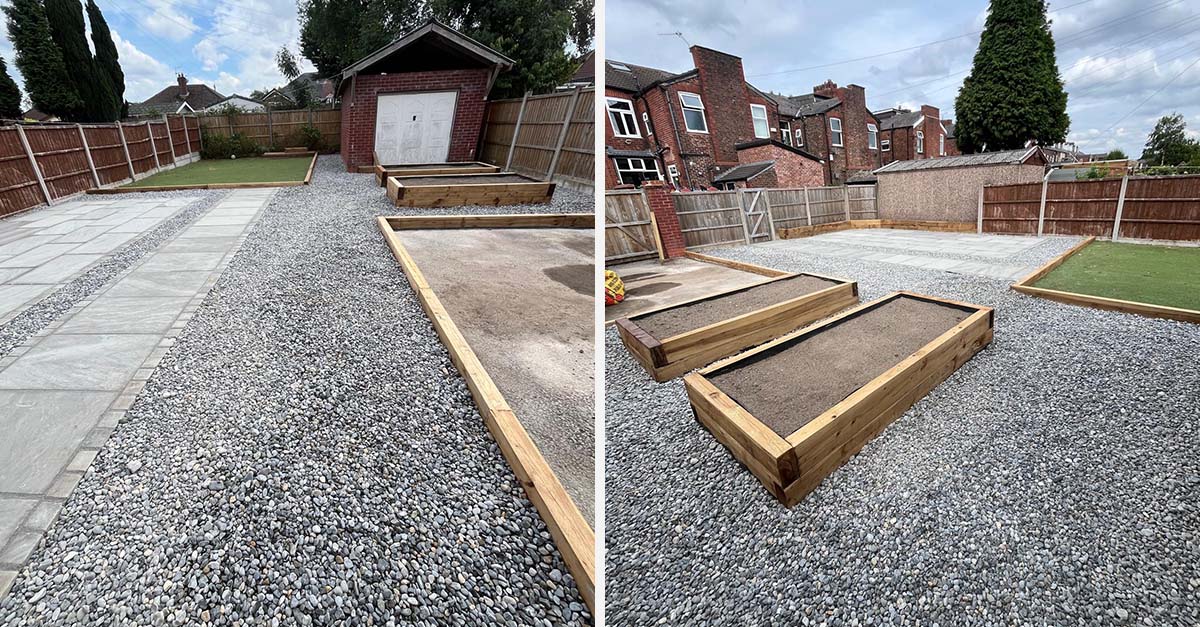
Around the patio we built raised planters from treated timber sleepers. They add height and structure to the garden, and they give you somewhere to put planting without losing patio space.
Beside the paving we laid decorative 20mm blue-grey pebbles, with a geotextile membrane underneath. The membrane keeps the soil and stone apart and helps keep weeds down, so the pebbles stay looking clean.
The sandstone sett border
The Kandla Grey setts frame the patio and tie the paths into it. They're a small touch, but they give the edges a finished, deliberate look instead of slabs just stopping.
Materials at a glance
Kandla Grey Indian sandstone paving and setts
Mortar bedding mix under every slab
Light grey brush-in resin jointing compound
Treated timber sleepers for the raised planters
20mm blue-grey decorative pebbles on geotextile membrane
The result
A tarmac garden is now a proper place to sit out, with a large sandstone patio, paths that match it, planting beds and clean stone borders. The joints are full and tidy, and every part of it has been seen through to a finish.
Thinking about a new patio or garden landscaping in Stockport?
For a full garden transformation like this one, or just a single patio, we start with a site visit so we can price it properly. Send us a few photos on WhatsApp and we'll arrange to come and take a look.
We work across Heaton Chapel, Heaton Moor, Heaton Norris, Reddish, Edgeley, Cheadle, Didsbury and the rest of Stockport and south Manchester.
[Book a site visit on WhatsApp]
FAQs
Can you turn a tarmac garden into a patio? Yes. This Heaton Chapel garden was tarmac before we started, and it's now a sandstone patio with paths, sett borders, planters and pebble areas. Every garden is different, so we price after seeing it.
What is Kandla Grey sandstone? It's an Indian sandstone with a cool, even grey tone, popular for modern patios. We laid it in a brick bond pattern with matching setts for the border.
Why lay patio slabs on a full mortar bed? A full bed supports the entire slab, so there are no hollow spots underneath. It's slower than laying on a few dabs of mortar, but it gives a more stable, longer-lasting patio.
What is resin jointing, and does it stop weeds? Resin jointing is a brush-in compound that's worked into the joints and activated with water. When it's compacted firmly into every joint, it helps reduce weed growth and washout. We used a light grey resin on this patio.
Should I choose resin or sand and cement for my patio joints? It depends on the paving and the look you want. Resin is quick and hard-wearing. Sand and cement gives a traditional finish and is the better match when repairing existing pointing. We'll recommend one when we see the site.
Do you build raised sleeper planters and pebble areas too? Yes. On this job we built raised planters from treated timber sleepers and laid 20mm blue-grey pebbles over a geotextile membrane, alongside the patio and paths.


